
Blog
Car Lift Installation Site Checklist: Measure Before You Order


The best time to discover a ceiling, slab, power, or delivery limitation is before the lift ships. A site review turns a product shortlist into an installable plan and gives the installer the information needed to evaluate the selected model.
There is no responsible universal concrete thickness, anchor, or electrical answer for every lift. Use the current manual for the exact model and have uncertain structural conditions evaluated by a qualified professional.
1. Document the vehicles and work
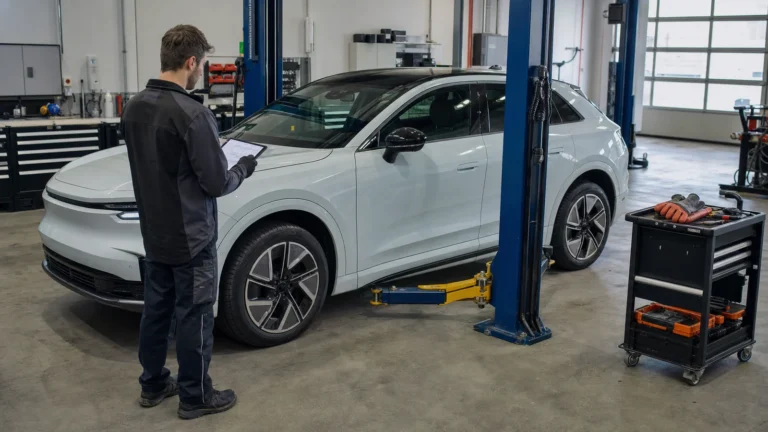
- Record the heaviest vehicle’s actual operating weight and configuration.
- Measure wheelbase, track width, ground clearance, overall height, and relevant overhangs.
- List the services the lift must support: wheel-off repair, alignment, storage, inspection, EV work, or fleet service.
- Note accessories that change space or utility needs, such as rolling jacks, air locks, power units, or ramps.
2. Measure the usable bay
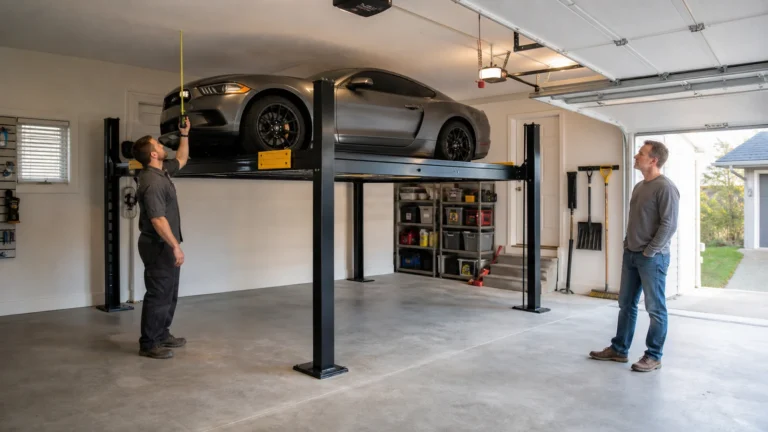
Measure clear width, clear depth, and ceiling height at several points. Buildings are not always square, and overhead objects can reduce usable height even when the ceiling itself appears sufficient.
- Garage-door tracks and openers
- Lighting, fans, sprinklers, ducts, beams, and mezzanines
- Floor drains, control joints, cracks, patches, and embedded utilities
- Cabinets, workbenches, stairs, doors, and technician circulation
- Approach room needed to drive straight onto or between the lift
3. Review the slab
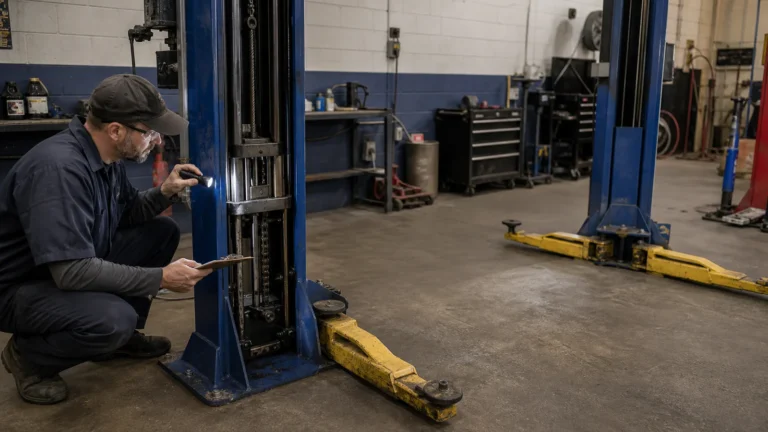
Do not assume that a garage floor is suitable because it looks thick at an exposed edge. The selected model manual controls slab strength, thickness, condition, cure, edge distance, anchor location, and other installation details. Existing cracks, unknown reinforcement, post-tension construction, or embedded heating require special attention.
If documentation is unavailable, the installer or a qualified structural professional may need to investigate the slab. Never drill until embedded systems and manufacturer requirements have been addressed.
4. Confirm electrical and air service
Record the available voltage, phase, breaker capacity, disconnect location, receptacle type, and routing distance. Do not choose wiring or protection from a similar-looking lift. The nameplate, manual, applicable code, and qualified electrician control.
Some locks or accessories also use compressed air. Confirm pressure, volume, filtration, connection size, and hose routing for the selected configuration.
5. Plan freight access
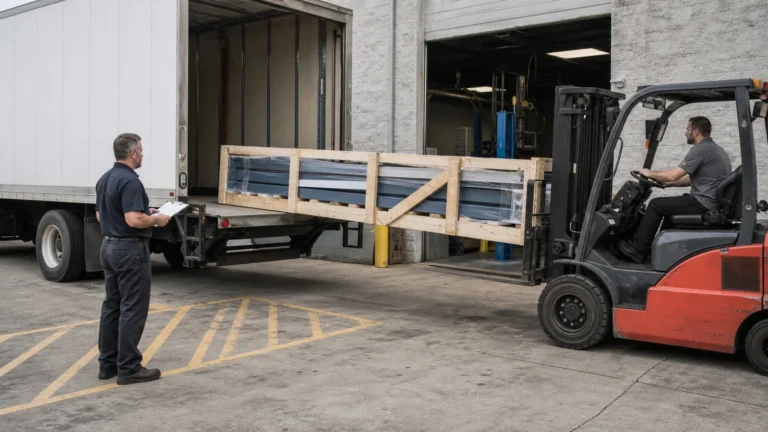
Vehicle lifts arrive as long, heavy freight. Before ordering, confirm truck access, unloading equipment, receiving hours, surface condition, gate dimensions, overhead clearance, and a secure place to stage the shipment. Residential, limited-access, liftgate, or appointment requirements should be identified in advance.
Information to send for specification review
- Bay width, depth, and lowest clear overhead height
- Photos facing into and out of the bay
- Door-track, opener, drain, beam, and utility locations
- Vehicle measurements and intended service tasks
- Known slab documentation and concerns
- Delivery ZIP code and unloading plan
Prepare the bay
Send the measurements with your shortlist
Lift Care can help compare published model dimensions and delivery requirements once your site and vehicle information are ready.