
Blog
Two-Post vs. Four-Post Car Lifts: Which Fits Your Work?

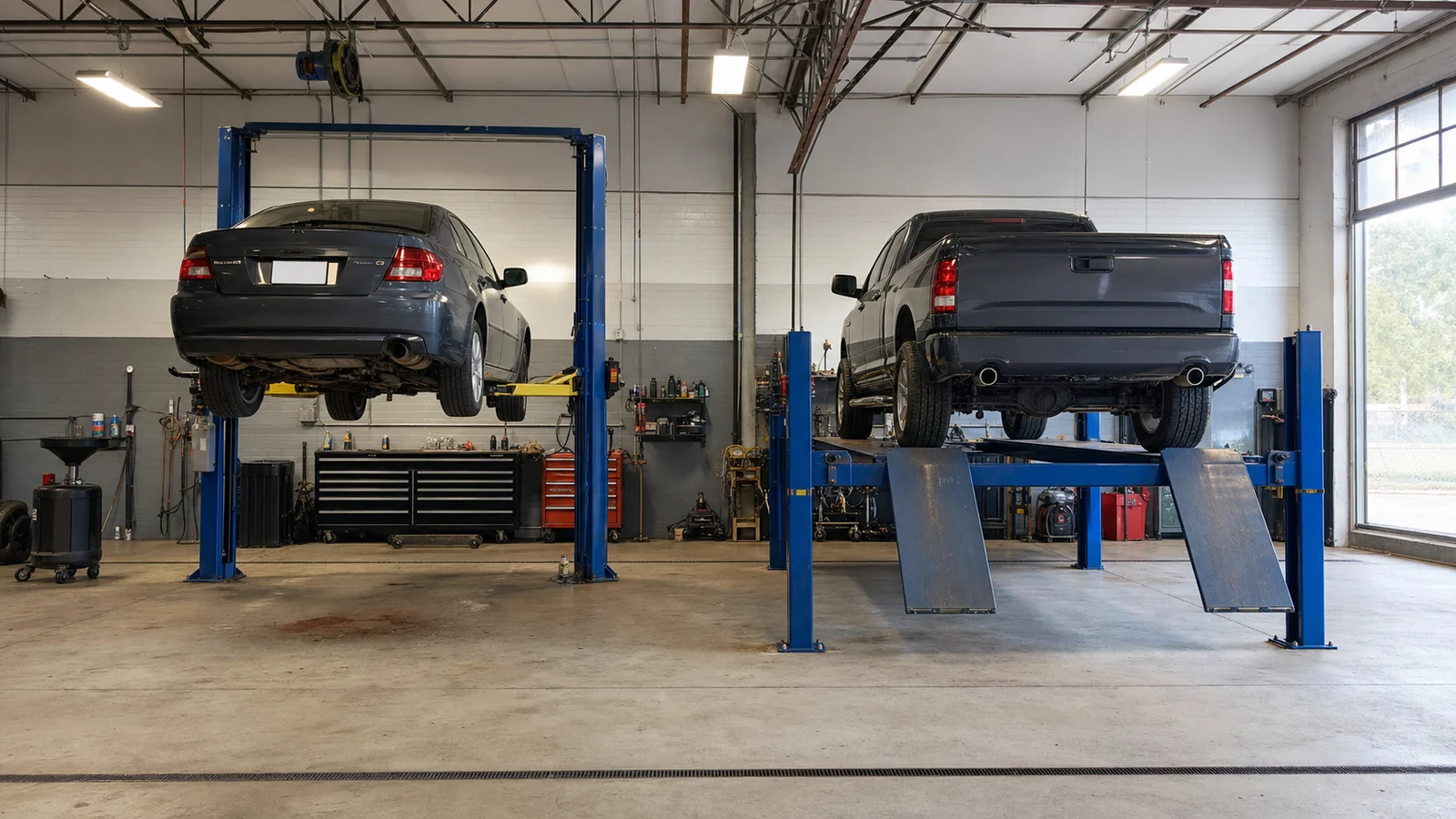
A two-post lift is usually the more direct choice for wheel-off mechanical work. A four-post lift is often easier to drive onto and can support storage, inspection, alignment, and general-service workflows. The right answer depends on what you plan to do—not on which style looks more impressive.
Start with the vehicles, tasks, and building. Then compare specific models using their published manuals and dimensions. Capacity alone does not establish compatibility.
The practical difference
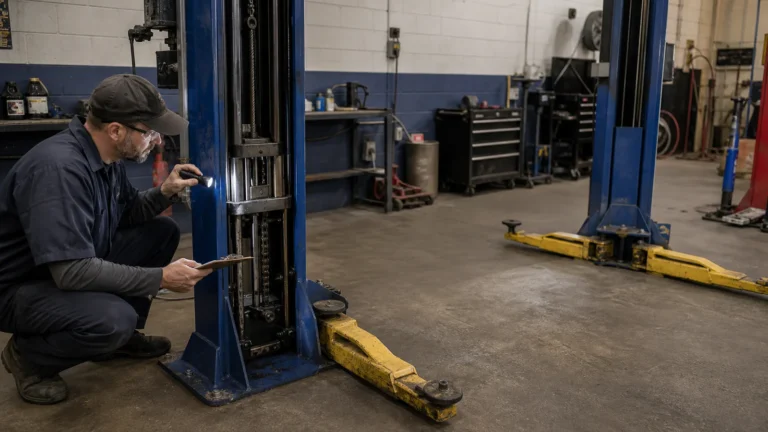
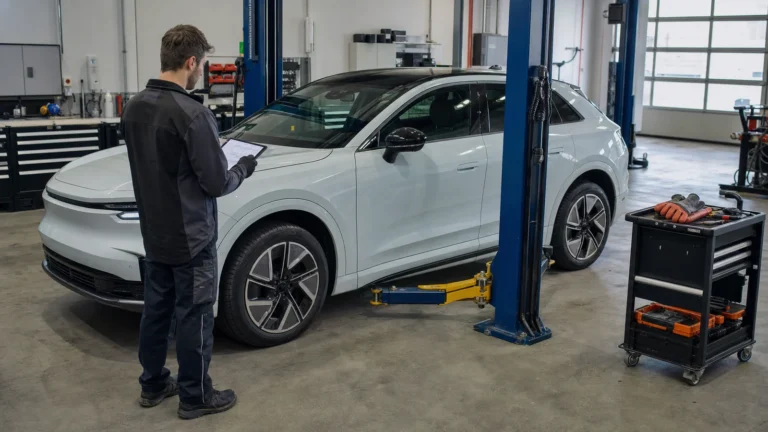
A two-post lift supports the vehicle at manufacturer-approved lifting points. With the wheels hanging free, technicians have direct access to brakes, suspension, steering, tires, and much of the underbody. Correct spotting, arm reach, adapters, and vehicle balance are central to the workflow.
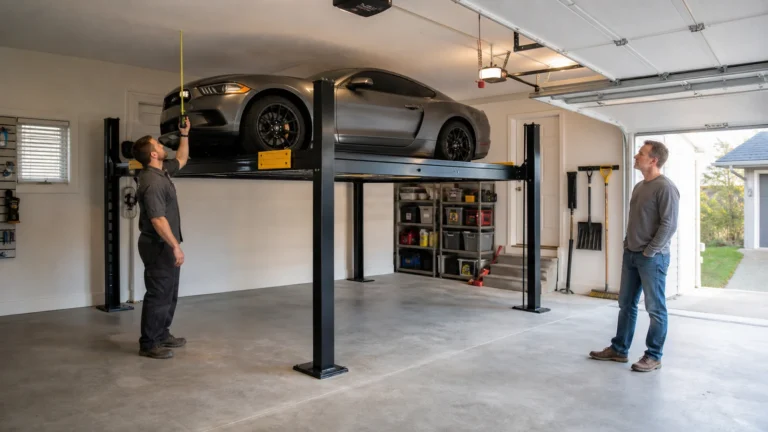
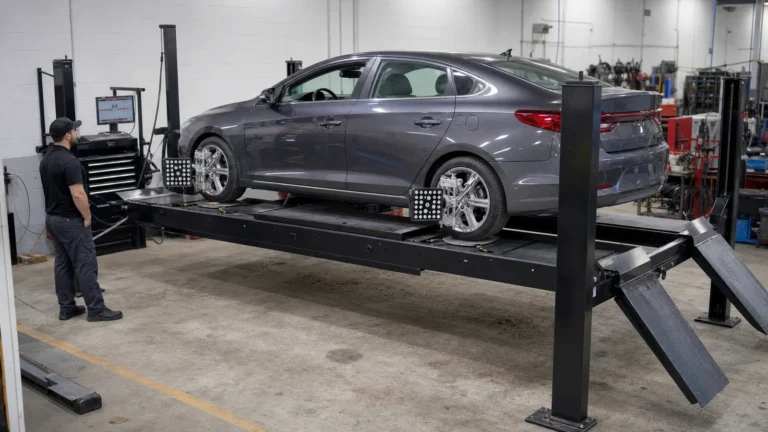
A four-post lift supports the tires on runways. Driving onto the rack is straightforward, and the long platforms suit storage, inspection, exhaust work, fluid service, and—with the right rack—wheel alignment. Wheel-free service normally requires compatible rolling bridge jacks or another manufacturer-approved method.
| Decision point | Two-post lift | Four-post lift |
|---|---|---|
| Primary support | Vehicle lifting points | Tires on runways |
| Wheel-off access | Available once correctly positioned | Usually requires rolling jacks |
| Parking/storage | Not the normal use case | Common use case on approved models |
| Vehicle spotting | Arm and pad placement required | Drive-on positioning |
| Alignment work | Not the standard choice | Use an alignment-equipped rack |
| Bay planning | Column, arm, overhead/floorplate, and door clearance | Runway length, ramp approach, posts, and storage height |
Choose a two-post lift when
- Most work requires wheels to hang free.
- You service brakes, suspension, tires, driveline, or steering frequently.
- Your vehicle mix matches the model’s capacity, arm reach, pad height, and installation width.
- Your slab, ceiling, power, and bay layout satisfy the selected model manual.
Choose a four-post lift when
- You want drive-on simplicity for inspection or general service.
- Vehicle storage is a central goal.
- You need an alignment rack designed for your alignment equipment.
- You are prepared to add compatible rolling jacks for wheel-free work.
Five measurements that prevent the wrong purchase
- Vehicle data: actual weight, wheelbase, track width, ground clearance, overall height, and approved lifting points.
- Bay dimensions: usable width, depth, ceiling height, and approach space—not just the room’s nominal dimensions.
- Obstructions: door tracks, openers, lighting, beams, ducts, drains, cabinets, and traffic paths.
- Foundation: slab condition and the exact concrete requirements in the model manual.
- Utilities: electrical and, where applicable, air requirements for the selected configuration.
Compare the categories
Start with the work you do most
Review the real specifications, options, and current availability for Lift Care’s two-post and four-post collections.