
Blog
What Makes a Car Lift EV-Ready?

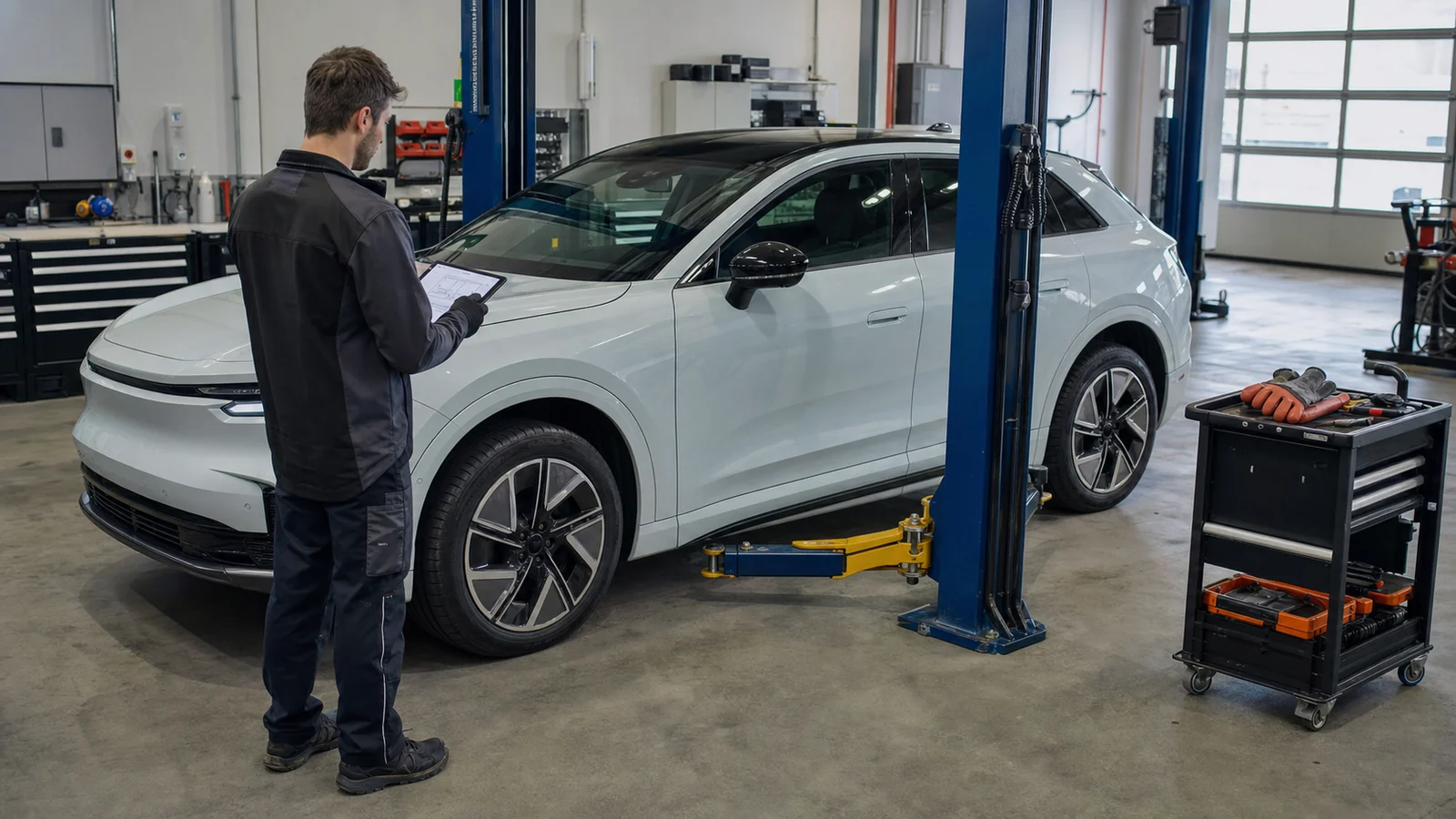
An EV-ready lift is one that safely supports the actual electric vehicles and service procedures in your shop. Higher vehicle weight matters, but so do wide outer lifting points, protected battery areas, low clearances, pad interfaces, arm reach, and access for battery-handling equipment.
Weight is only the first check
Battery packs can increase vehicle weight and change distribution. Verify the exact model and configuration rather than relying on a gasoline version’s data. Compare total capacity together with every per-arm, axle, runway, adapter, and accessory limit.
Lifting points may move outward
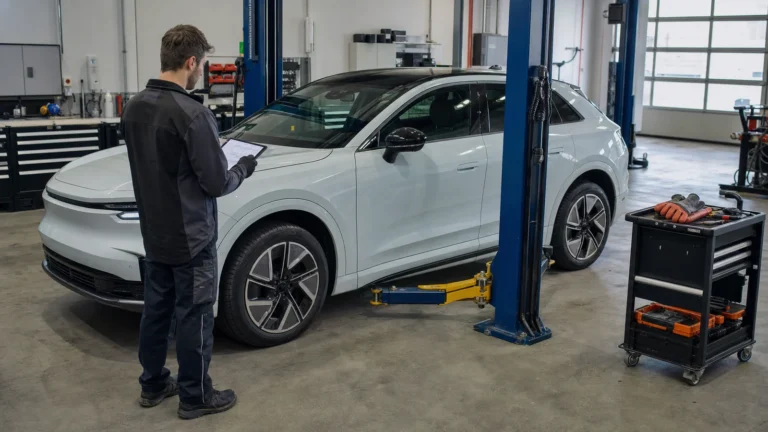
Large underfloor battery enclosures can leave approved lifting points near the outer edges of the chassis. A two-post lift may need sufficient arm reach, sweep, low pad height, and approved EV-specific pads or adapters to reach those points without contacting protected areas.
Use the current vehicle-manufacturer lifting information. Never select an alternate contact point because it is easier to reach.
Protect the battery area
- Confirm pads and adapters engage only approved structural points.
- Check clearance around shields, coolant lines, high-voltage components, and the battery enclosure.
- Do not place transmission jacks or general-purpose supports beneath a battery unless the vehicle and equipment procedures approve them.
- Provide enough access for the intended battery table or handling device.
Plan the complete EV service bay
Battery removal can require more vertical travel below the vehicle, a level floor, a purpose-built lift table, defined approach paths, and space to move a heavy battery assembly safely. Electrical isolation equipment, insulated tools, barriers, and trained personnel are separate parts of the plan.
A lift that works for general EV maintenance may not be suitable for battery removal. Define the procedures before choosing equipment.
Questions for the shortlist
- Which current and expected EV models will enter the bay?
- What are their actual weights and approved lifting-point locations?
- Can the arms and pads reach those points in the approved installation width?
- Is battery-area clearance preserved?
- Does the lift leave room for the approved battery-handling system?
- Are training, PPE, isolation, and emergency procedures in place?
Prepare for the vehicle mix
Review reach—not just rated capacity
Compare two-post and specialty lift specifications against the EV lifting points and service procedures you actually support.