
Blog
Car Lift Freight Delivery Checklist: Before the Truck Arrives

A vehicle lift is long, heavy freight—not a parcel left at the front door. A clear receiving plan protects people, equipment, and the damage-claim record. Confirm access and unloading before the shipment is dispatched.
Before ordering
- Confirm the packaged dimensions, shipment weight, piece count, and handling points.
- Identify commercial, residential, limited-access, appointment, and liftgate conditions accurately.
- Verify the road, gate, driveway, turn, surface, and overhead clearances for the expected truck.
- Choose unloading equipment with documented capacity and fork length for the shipment.
- Assign trained personnel and a secure staging location.
Liftgate does not solve every delivery
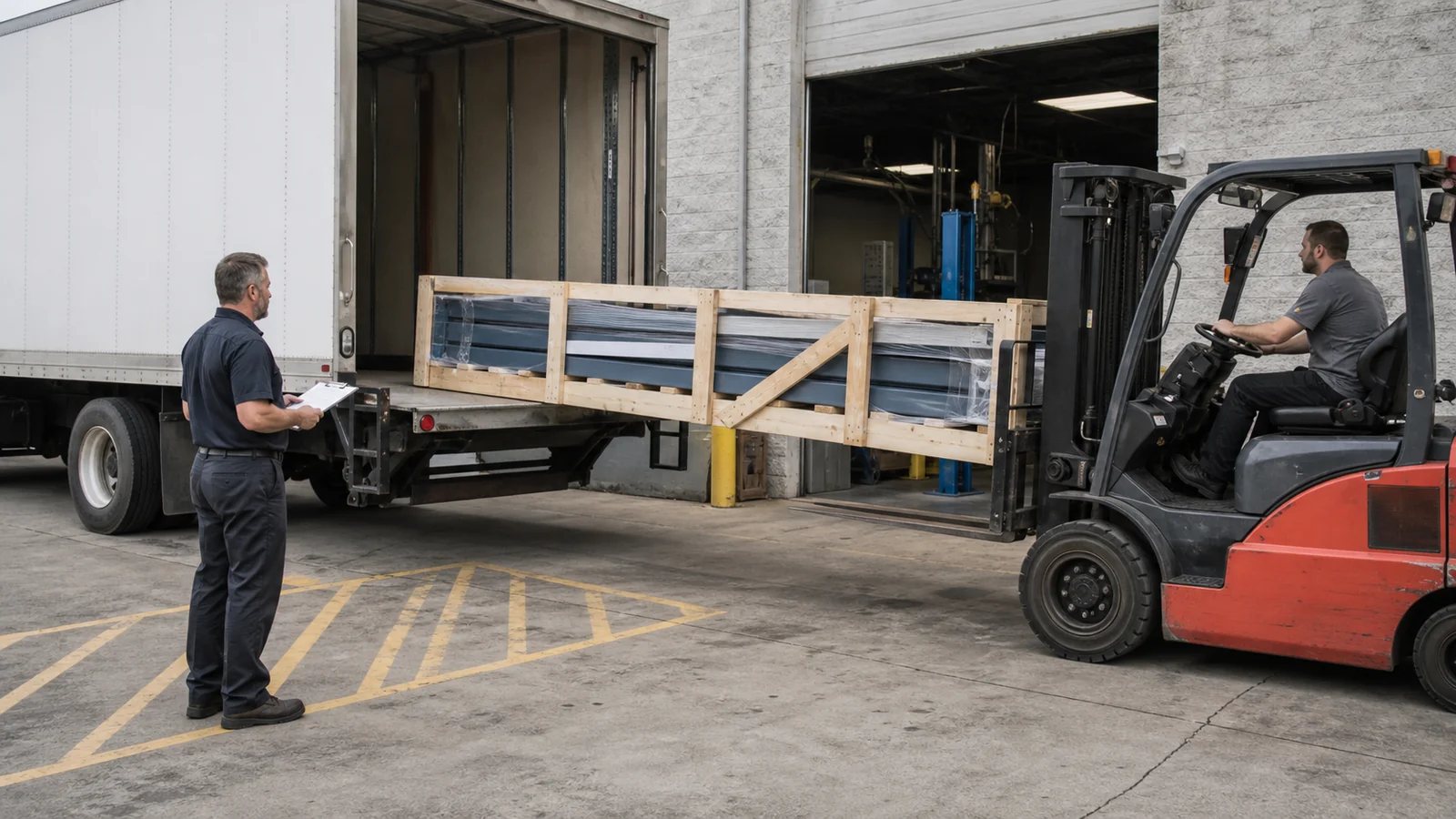
A liftgate can lower some freight from the trailer, but long vehicle-lift packages may exceed platform dimensions or create unsafe balance. Confirm the exact shipment and carrier service instead of assuming “liftgate required” is a complete unloading plan.
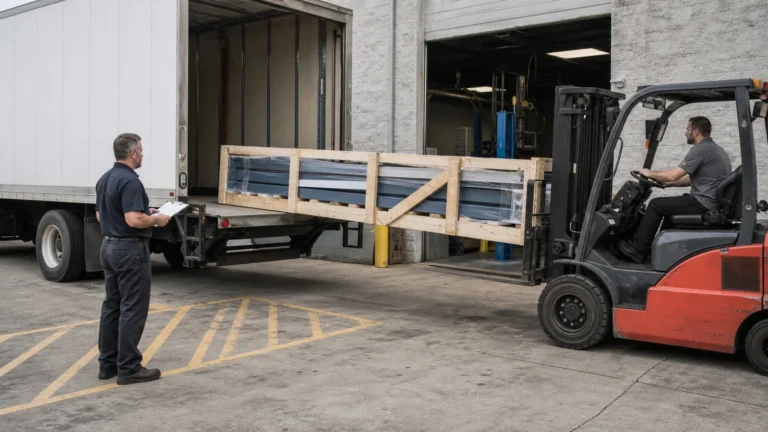
Depending on the shipment, a suitable forklift, telehandler, loading dock, crane service, or terminal pickup may be required. The equipment operator controls the unloading procedure.
Prepare the receiving area
- Keep customers and unassigned staff outside the unloading zone.
- Provide a firm, level surface appropriate for the unloading equipment.
- Clear parked vehicles, low branches, wires, doors, and stored materials.
- Have wheel chocks or other site controls required by the operator and carrier.
- Protect the shipment from weather after unloading.
Inspect before signing
Compare the visible piece count with the delivery documents. Walk around every package and look for torn wrapping, broken bands, punctures, crushed corners, shifted steel, exposed components, wet packaging, or other visible damage.
Photograph the shipment on the trailer and during unloading when it is safe to do so. If damage or shortage is visible, describe it specifically on the carrier document before signing. A vague note such as “subject to inspection” may not document the condition adequately.
After unloading
- Photograph every side of the packages and all visible labels.
- Keep packaging and bands until the contents are inventoried.
- Compare components with the manufacturer packing list.
- Report damage or shortage promptly using the order and freight reference.
- Do not install visibly damaged structural or safety-critical components.
Information that speeds support
- Lift Care order number
- Freight tracking or LCN reference
- Carrier delivery document with specific notation
- Photos before and after unloading
- Package and component labels
- Clear description of missing or damaged pieces
Plan delivery before dispatch
Review the live Lift Care shipping terms
Confirm the delivery address, access conditions, receiving contact, and unloading plan before ordering heavy equipment.