
Blog
Alignment Lift Buying Guide: Rack, Vehicle, and Bay Fit

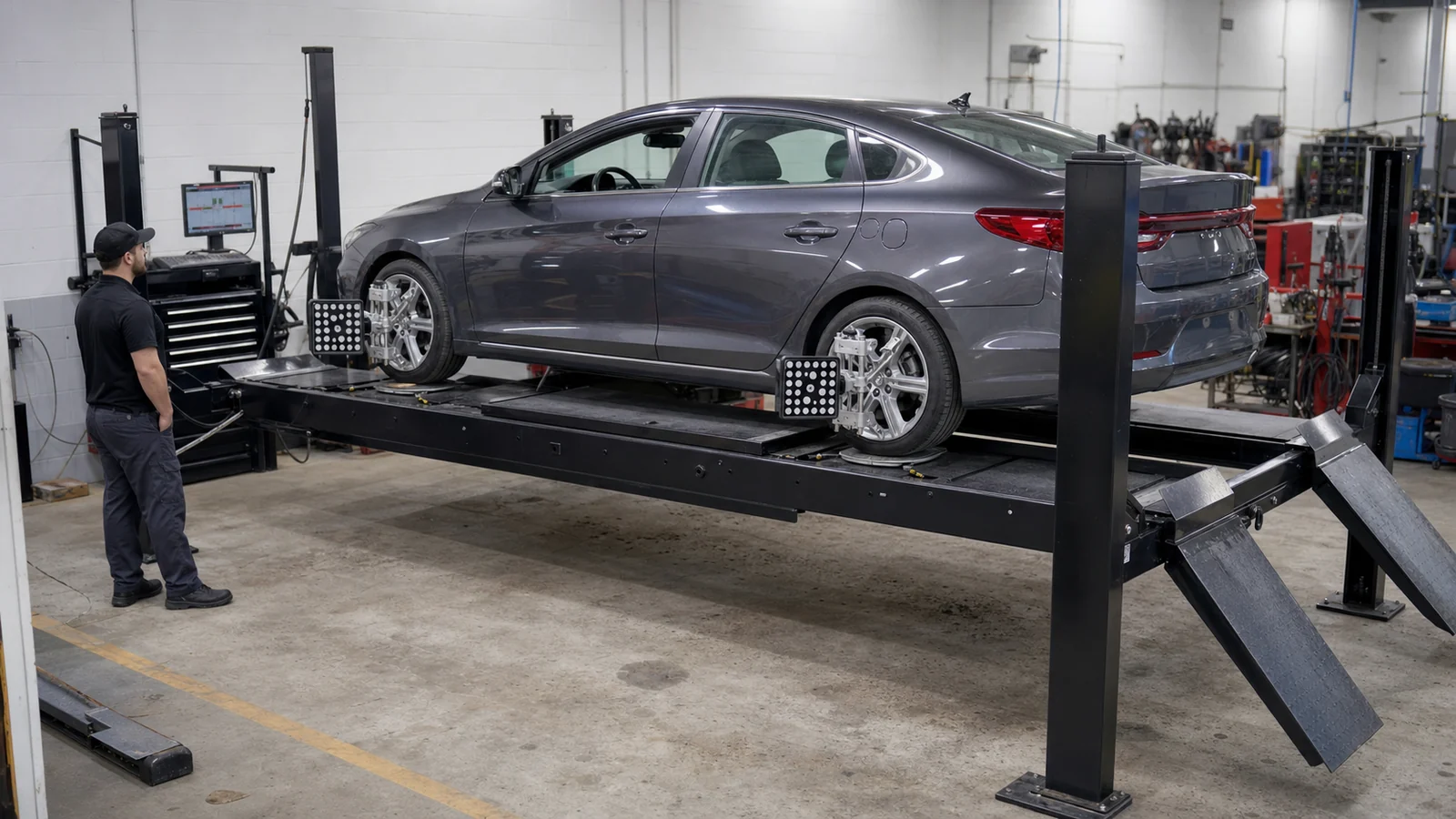
An alignment lift is a system, not only a platform. The rack, alignment equipment, turntables, slip plates, rolling jacks, vehicle range, bay, and technician workflow must work together. Confirm compatibility before treating an accessory-ready rack as a complete alignment solution.
Start with the vehicle range
Record the shortest and longest wheelbases, narrowest and widest track widths, tire sizes, ground clearances, and heaviest expected vehicles. Check that every tire is properly supported throughout drive-on, measurement, adjustment, and roll-compensation procedures used by your equipment.
Rack features to compare
- Runway length and width: must fit the intended wheelbases and tire positions.
- Turntable locations: must accommodate the front axle range and the selected alignment system.
- Rear slip plates: review size, travel, locking method, and vehicle coverage.
- Leveling and locks: repeatable working positions matter to the process.
- Rolling-jack rails: verify approved jack models, capacity, reach, and air supply.
- Approach: low-profile vehicles may require a documented ramp solution.
Coordinate the alignment equipment
Camera towers, sensor cabinets, targets, turntables, communication hardware, and calibration requirements can change the bay plan. Confirm line-of-sight, distances, mounting points, floor level, power, network, and working clearance with the alignment-equipment provider.
Do not assume that a rack described as “alignment ready” includes every plate, filler, jack, airline, or interface your system requires.
Plan technician movement
Leave room to open doors, mount targets, reach adjustment points, roll vehicles where required, operate controls, and use jacks without blocking adjacent bays. Include columns, ramps, consoles, tool storage, and door swings in the drawing.
Installation quality affects the workflow
The manufacturer’s site and installation requirements control. Floor condition, anchoring, leveling, electrical work, compressed air, and final commissioning should be resolved by qualified professionals. Establish who will coordinate the rack, alignment system, calibration, and operator training.
Before-you-buy checklist
- List all vehicle classes and dimensions.
- Identify the exact alignment system and its rack requirements.
- Confirm turntable, slip-plate, and rolling-jack compatibility.
- Draw the complete bay with equipment and access zones.
- Verify slab, power, air, network, and calibration needs.
- Define installation, commissioning, training, and inspection responsibilities.
Alignment bays
Compare the rack as a complete system
Review current alignment-lift configurations, then confirm the rack interfaces with your vehicles, alignment equipment, and bay.