
Blog
Car Lift Inspection and Maintenance: A Practical Ownership Checklist

Safe lift ownership combines trained operators, pre-use observation, maintenance performed on the manufacturer’s schedule, prompt qualified repair, and a documented inspection by a qualified lift inspector at least annually. These activities support one another; none replaces the others.
Before-use observations
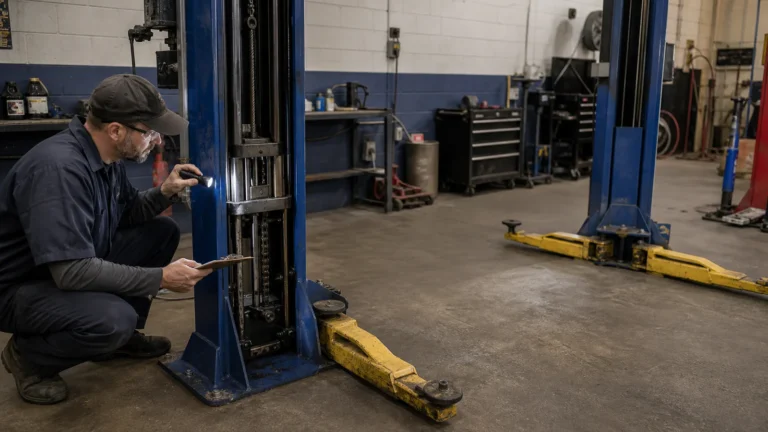
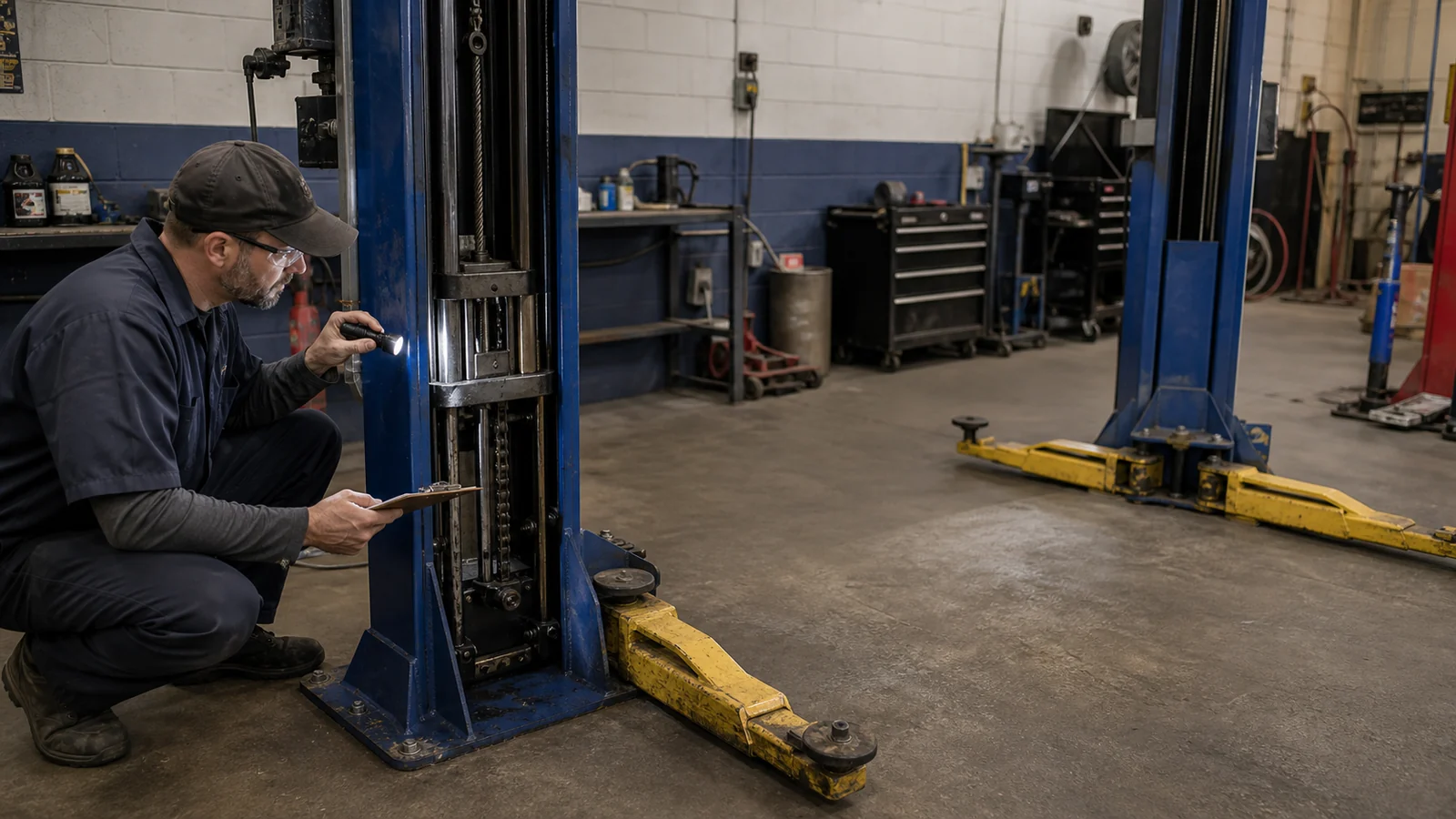
Operators should know the lift’s normal appearance and behavior. Before use, look for obvious damage, leaks, missing or unreadable safety information, unusual noises, obstructed travel, damaged contact pads, and problems with locks, restraints, cables, chains, hoses, or controls.
If anything appears abnormal, stop and follow the facility’s out-of-service procedure. Do not continue lifting to “see if it clears up.”
Follow the model’s maintenance schedule
Manufacturers specify daily, periodic, and time-based work for the exact lift. Typical categories can include cleaning, lubrication, cable or chain observation, hydraulic checks, anchor review, lock checks, arm-restraint checks, and inspection of pads and adapters. The actual tasks, products, measurements, and intervals come from the current manual.
Do not substitute a generic checklist for model-specific instructions, and do not adjust or repair lifting components unless qualified and authorized to do so.
Annual qualified inspection
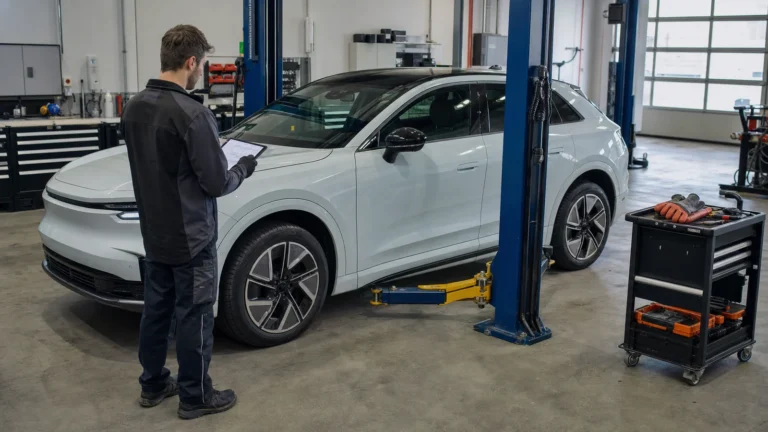
The Automotive Lift Institute states that the current ANSI/ALI ALOIM standard requires every lift to be inspected at least annually by a qualified lift inspector. ALI also recommends an inspection after installation to document the equipment, safety materials, training, and installation condition.
Find independent inspection guidance at ALI’s Lift Inspection FAQ.
Keep a useful equipment file
- Manufacturer, model, serial number, and capacity information
- Current installation, operation, and maintenance manual
- Installer and commissioning records
- Operator training records
- Maintenance and repair history
- Annual inspection reports and corrective actions
- Approved accessory documentation
When the lift should remain out of service
Examples include failed or questionable locks, structural damage, uncontrolled movement, severe leaks, damaged load-contact components, missing safety-critical parts, frayed or damaged load-bearing components, anchor concerns, or any condition identified by the manufacturer, inspector, or qualified service provider.
Use a clear tag-out process and prevent operation until the condition is evaluated and corrected.
Monthly management check
- Confirm every operator has current training.
- Review whether reported concerns were resolved and documented.
- Confirm the manufacturer maintenance schedule is current.
- Verify manuals and safety materials remain available.
- Check the annual inspection due date and corrective-action status.
Protect the equipment lifecycle
Keep the model and serial information ready
For Lift Care product or parts questions, include the manufacturer, model, serial number, and a clear description of the issue.